
 More
Activities
More
ActivitiesLake Tahoe Birding Guide: Birds, Songs & Trails
The Lake Tahoe Basin is filled with birds whose colors and songs bring the forest to life. This page introduces some of the birds you're most likely to see, with photos and audio players so you can enjoy their voices just as we do on the trails. Each bird image and audio is accompanied by a link to our short video from our YouTube series about birds of Lake Tahoe. Then, lower on this page, you will also find our recommendations for best places at Tahoe to enjoy birding.
Western Tanager
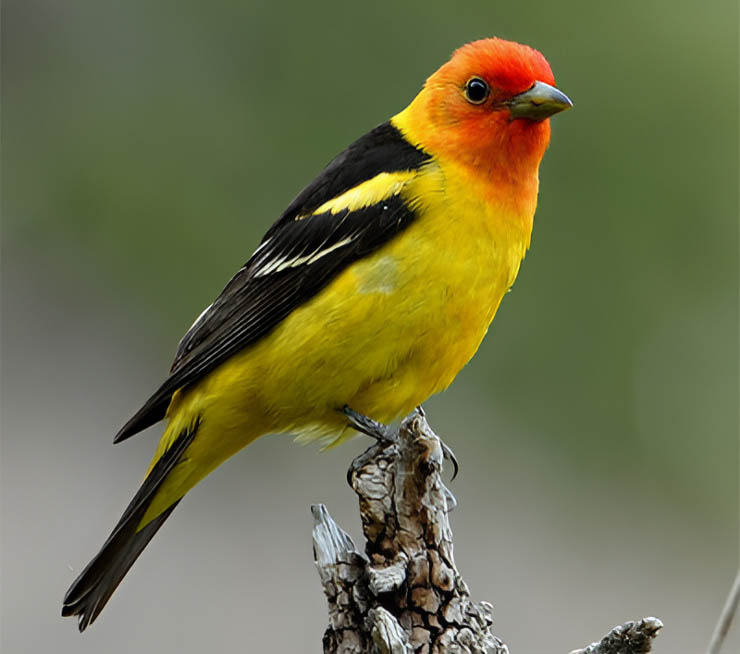
The male Western Tanager is one of the most colorful birds in the Lake Tahoe Basin. This bird's red head, bright yellow body with black on the back, wings, and tail, makes him a very eye-catching bird. His female is less vibrantly colored in greenish-yellow with a gray back and wings and less bright white wing bars, but she is beautiful as well!
You will find Tanagers in the trees. The first time we saw a pair, they were watching us skip along on the trail before we even noticed them. However, once we stopped to admire them from below, they were not shy and gave us ample time for enjoyment from afar. One good place we found for viewing the Tanagers was on trail that runs along the south side of the Truckee River meadow on the edge of the forest near the South Lake Tahoe Airport.
Thank you for the photo: Pacific Southwest Region USFWS from Sacramento, US, Public domain, via Wikimedia Commons; and for the audio: Francis C, Ortega C, Cruz A via Creative Commons Attribution 2.5 Generic license.

Dark-Eyed Junco
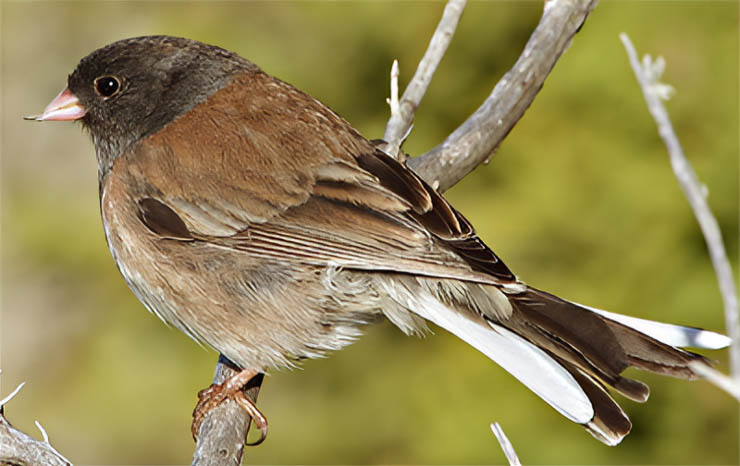
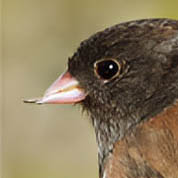
One of the four forms of Dark-Eyed Junco, the Oregon Junco is one of the most abundant and easily recognized birds in the Sierra forest. You are most likely to find these small birds eating seeds on the forest floor. This Dark-Eyed Junco is found in the Pacific Coast mountains from southeastern Alaska to northern Baja California, and they winter in the Great Plains and northern Sonora.
Thanks for the image: Walter Siegmund, CC BY-SA 3.0; and the audio: USGS Public Domain.
Yellow-Headed Blackbird
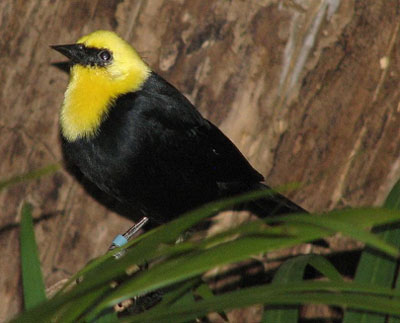
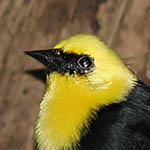
The Yellow-Headed (Yellow Hooded) Blackbird is often found in cattail and marsh habitats. It is generally spotted in the Pope Marsh, west of South Lake Tahoe, during early spring. To get there, go northwest on Emerald Bay Rd. (Hwy 89) from The Y (junction of Hwy 50 and Hwy 89) about 2 miles, and turn right on Pope Beach Rd. Or, park on Hwy 89 and walk toward Lake Tahoe (northward).
No other Lake Tahoe Basin bird has such a distinctive yellow head and black body. Female coloration is quite different, with brown bodies and pumpkin-colored hoods.
Thanks for the image: Ltshears Trisha M Shears, Public Domain; and audio: Justin Watts, CC BY-SA 4.0 (both via Wikimedia Commons).
Mallard Duck
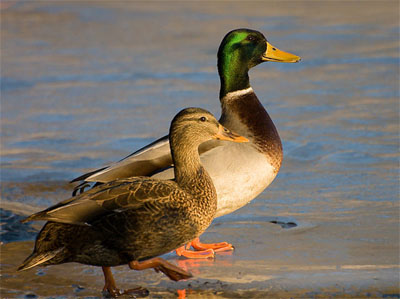
This type of duck is called a "puddle duck" because it typically prefers shallow water such as creeks, ponds, and marshes. You will also find Mallard Ducks on the beach, usually waddling along in pairs. In spring, you will see just the females and their new fuzzy ducklings, sometimes up to a dozen of them, paddling in the shallows or scurrying near the water's edge as they follow their mother duck along.
The male Mallard is easy to spot because of his glossy green head and narrow white collar, while the female is smaller with brown and golden colors. Often you can see Mallards flying south in formation for the winter, quacking loudly as they go.
Thanks for the image: Fcb981, CC BY-SA 3.0 via Wikimedia Commons; and audio: Public Domain.
Canada Goose
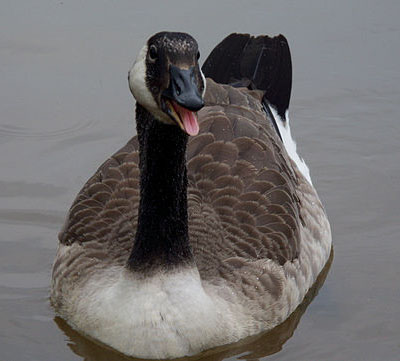
This is the most common goose in North America. Also called "Canadian Goose," it has a black head and neck with a distinctive white "chinstrap" stretching from ear to ear. Elevated nesting platforms installed in the Pope Marsh area in 1976 have greatly improved nesting success for the Canada Goose at Lake Tahoe.
These long-necked, noisy birds are very abundant during the summer. In fact, sometimes too abundant for beachfront property owners in places like Incline Village on the north shore of Lake Tahoe. At times, large groups gather on the shore and can leave quite a mess on the sandy beach. To solve the problem of goose droppings, wildlife personnel have rounded up, tagged, and relocated geese to areas outside the Tahoe Basin. Another innovative solution by the Parks Superintendent has been Goose Patrol Dogs, involving volunteers who help keep the beaches clear of geese. For birders, watching the goose roundups adds an unexpected and exciting dimension to bird watching at Lake Tahoe.
Thanks for the image: nottsexminer, CC BY-SA 2.0; and audio: Jonathon Jongsma, CC BY-SA 3.0, both via Wikimedia Commons.
Mountain Chickadee
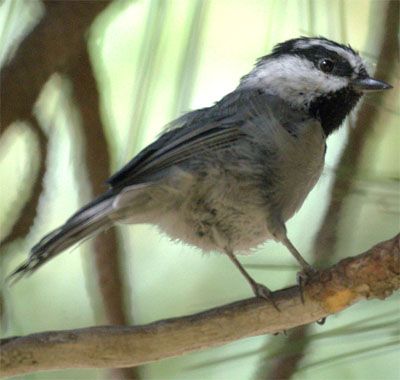
The most common bird in the Tahoe Basin is the Mountain Chickadee. These small plump birds have a black cap, a black bib under their chin, and a white line over each eye. Chickadees are very acrobatic, often swinging from the tips and undersides of branches as they hunt for insects and seeds.
They sing a very distinctive three-note whistle song - and it is loud! Many birders are surprised that such a tiny bird can produce such a powerful call. The chickadee sings a high note followed by two lower ones.
What is the Mountain Chickadee saying? Some birders hear "Hey Ba-by!" or even "Ham-bur-ger!" What do you think the lyrics are when you hear it?
Thanks for the image: Mike's Birds from Riverside, CA, US, CC BY-SA 2.0, via Wikimedia Commons; and audio: Mountain Chickadee Tahoe National Forest by Thomas G. Graves, CC BY-SA 3.0.
Steller's Jay
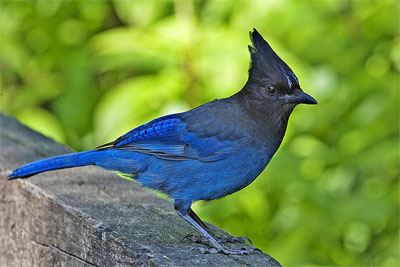
Almost anyone who spends time in the forest will meet the noisy Steller's Jay. It has a raspy call that is easy to identify, and this bright blue pigeon-sized bird is striking with its deep blue wings, tail, and breast.
Often this jay becomes quite bold and pesky, sometimes stealing your french fries right out of your hand as you picnic at Lake Tahoe. Such behavior is what earned this bird the nickname "Camp Robber." But you just have to love the Steller's Jays of Lake Tahoe!
Interestingly, although Steller's Jays look a lot like Blue Jays, they are actually different types of birds. The Steller's Jay has a more slender bill and longer legs than the Blue Jay, and it also has a much more pronounced crest. The Steller's Jay is a bit larger. Its head can be blackish-brown, black, or dark blue depending on the latitude, often with lighter streaks on the forehead.
Thanks for the image: Alan D. Wilson, www.naturespicsonline.com, CC BY-SA 3.0, via Wikimedia Commons; and audio: at Markleeville, CA, US, Bobby Wilcox, CC BY-SA 4.0.
Beautiful bird coasters delight Tahoe ornithophiles...
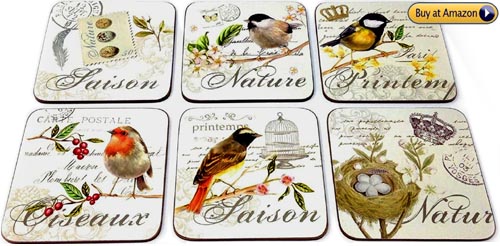
We love these beautiful bird coasters. Perfect for Tahoe ornithophiles (that's French for lovers of Les oiseaux, which is French for the birds they love). While creating our Tahoe Birders Guide, we found that many of the beautiful birds are depicted on coasters at Amazon. We purchased this set of the cork backed laminated coasters with colorful birds. But, there are many more lovely and useful coasters to browse and perhaps buy.
You can enjoy the beauty of nature while protecting your furniture. Or, give something lovely to the bird lover in your life.
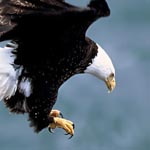
Bald Eagle
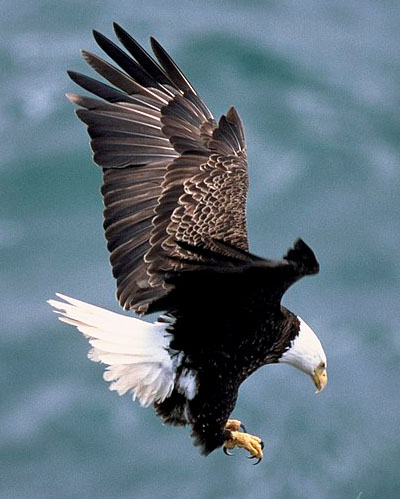
This eagle can occasionally be seen during the winter months at Lake Tahoe. The majestic adult Bald Eagle, with a wingspan reaching seven feet, can easily be identified by its white head and tail.
A good place to view bald eagles (and fish hawks) at Lake Tahoe is Spooner Lake, where there is a lovely trail that goes around the lake. You can hike, mountain bike, or cross country ski the trail as you go on your birding adventure. Here I have been delighted (and always surprised) whenever the fish hawks plummet out of the sky and splash into the water to take their prey.
The eagles at Spooner Lake are friendly, too. I have had the great delight of having bald eagles fly from over the lake, across my bow, and off into the pines at the edge of the lake, greeting me as I navigated the trail on cross country skis on the north side of Spooner Lake. What a treat that I will always remember.
The Bald Eagle sings more than one bird song, varying from a series of whistle-like chirps to loud screeches. Females may also sing their own unique high pitched long note. On this page, we feature an example of a male Bald Eagle's loveliest chirping call.
Thanks for the image: David Menke, Public Domain, via Wikimedia Commons; and audio: Public Domain.
Golden Eagle
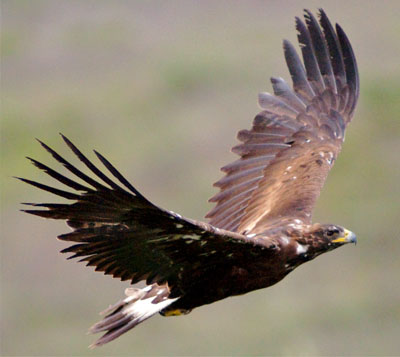
Although you can view Golden Eagles soaring around Lake Tahoe, you may have your best luck finding them in areas with large rock outcroppings, such as Squaw Valley, rather than flying around the big lake. That is a more favorite pastime for Bald Eagles.
Adults are brown with tawny on the back of the head and neck. Their tails are faintly banded. Juveniles have white patches at the base of the primaries and a white tail with a distinct dark terminal band. It takes four years to acquire adult plumage.
Golden Eagles are solitary birds that prefer remote areas. They do not congregate in large numbers during the winter. Being great hunters, Golden Eagles seldom eat carrion. They like to feast on waterfowl. Their hunting territory can extend up to 162 square miles.
Thanks for the photo: Public Domain; and audio: Bubulcus, CC BY 3.0, both via Wikimedia Commons.
Hairy Woodpecker
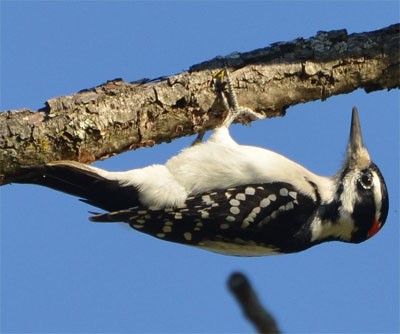
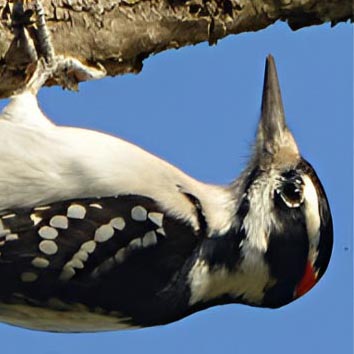
Hairy Woodpeckers are usually found in mature mixed woods around campgrounds and picnic areas. This robin-sized bird can be recognized by the vertical white stripe on its black back and its long bill. Like most woodpeckers, the Hairy Woodpecker feeds on tree boring insects, berries, acorns, and sap. These woodpeckers are often confused with Downy Woodpeckers, which have the same markings but are smaller and have a shorter bill.
The Lake Tahoe area has about nine types of woodpeckers, including Pileated, Lewis, Black-Backed, White-Headed, and more. Each type likes to peck particular trees, dead and alive. You may even find woodpeckers drilling into the siding of your house.
Thanks for the photo: Andy Reago and Chrissy McClarren, CC BY-SA 2.0; and audio: Jonathon Jongsma, CC BY-SA 4.0, both via Wikimedia Commons.
California Gull
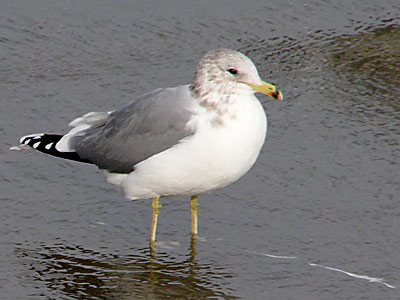
The California Gull, often spotted at Lake Tahoe beaches, is the same gull seen on Pacific Ocean beaches and is commonly referred to as a seagull. Typical of most gulls, the California Gull is a true scavenger, feeding on garbage, insects, plant material, and fish. You will often see these gulls doing their part for the environment as they clean up the beach of discarded french fries and pizza crusts.
Another type of gull is the Ring-Billed Gull, which has a black stripe around its bill. Although not as common as the California Gull, you will also see this bird at Tahoe beaches.
Thanks for the image: Photo by Jim Stasz, Public Domain; and audio: Paul Marvin, CC BY-SA 3.0, both via Wikimedia Commons.
Tahoe Birders Get Smart!

How to Choose Binoculars
All About Binocular and Optics Specs
Our guide to choosing binoculars keeps things simple, so that you can focus on your birding rather than stressing over binocular specs.
American Robin
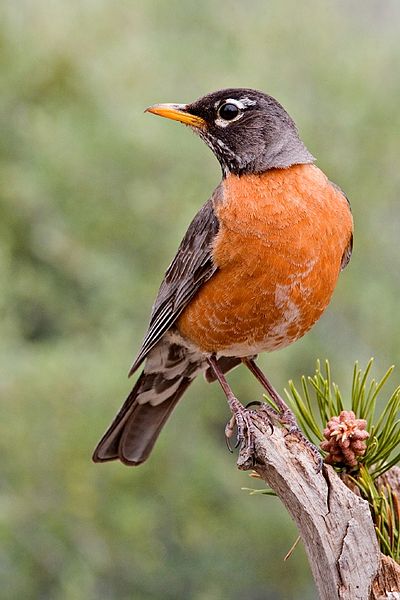
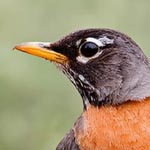
The Robin is a summer visitor in the Lake Tahoe Basin, appearing soon after the snow melts. It is always a fun family pastime to see who can spot the first Robin of Spring.
The Robin's brick-red breast really stands out, which is why everybody calls this bird Robin Red Breast. Its yellow bill and gray back make identification easy. It is a very common bird, frequently observed hopping across lawns or small openings in the forest while searching for worms and insects.
What a pretty and varied song the Robin has. In our sound sample you can enjoy an American Robin gleefully announcing that it is Spring, while in the background a Mountain Chickadee chimes in.
Thanks for the image: naturespicsonline.com, CC BY-SA 2.5; and audio: Mdf, CC BY-SA 3.0, both via Wikimedia Commons.
Red-Tailed Hawk
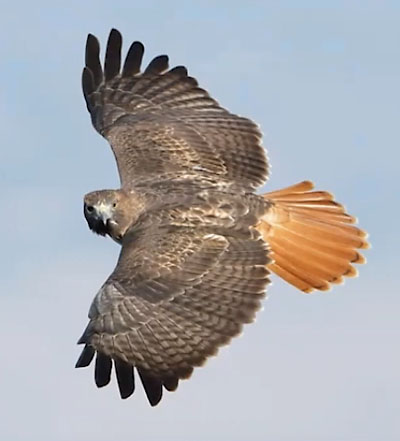
Now this sounds like a Bird of Prey. The Red-Tailed Hawk is a large hawk weighing about two to four pounds, with broad wings. When you see this bird soaring against the sky, its reddish-brown tail fanning out really seems to glow. The adult Red-Tailed Hawk is usually dark brown on its back and wing-backs and light on the belly and under wings.
You can view Red-Tailed Hawks at Lake Tahoe and far beyond. They range from central Alaska through Canada and across the entire United States, including south through Mexico and into Central America.
These raptors like to dine on a wide variety of prey, preferring mammals from small mice to rabbits and hares. They will also take medium-sized birds and reptiles, including lizards and snakes. They habitually soar in wide circles and can easily be seen riding the air currents as they hunt for rats, mice, rabbits, or an occasional small reptile. I have often experienced the surprise of watching a small rodent or bird scurrying along the ground one moment, then in the next moment being snatched up and flown off by a Red-Tailed Hawk.
Thanks for the image: Public Domain via Wikimedia Commons; and audio: Jeff Dyck, CC BY-SA 4.0.
Where to View Birds at Lake Tahoe
Birding at Fallen Leaf Lake Near South Lake Tahoe
Fallen Leaf Lake offers a variety of birds and nice trails for birders. The best time of the year for birding at Lake Tahoe is from April to July.
Mount Tallac (9,735 ft.) and nearby Taylor Creek are marvelous habitats for specialty birds, including Blue Grouse, Pygmy Nuthatch, Osprey, Western Tanager, Calliope Hummingbird, and in the winter, Bald Eagle. Also, a lot of types of woodpeckers, such as the Hairy Woodpecker and the White-headed Woodpecker, live there along with a wide variety of terns, sparrows, warblers and finches.
Just ask anybody who has ever lived in South Lake Tahoe about the numerous woodpeckers there. You may get a long response including their description of the extremely loud drilling sound of a woodpecker pile driving holes in the siding of their homes, and recommendations for siding repair as well as ways fend off the birds so that they will go back to the wild and drill tree bark instead of expensive real estate. But, even the most annoyed homeowner will also describe in detail the beauty of the woodpeckers!
When venturing out, you can visit the Visitor Center on Hwy. 89 near Fallen Leaf Road for more information about the trails and nearby birds. Take the Fallen Leaf Lake Trail from the Fallen Leaf Road parking area to Fallen Leaf Lake. The lake is an easy hike just about 1/2 mile from the parking lot.
You can continue on the trail across the north shore of Fallen Leaf Lake, about a mile, for a lovely 3-mile out-and-back hike. Or, you can follow the trail another mile toward the north along Taylor Creek to the Fallen Leaf Campground.
Another option is following the Rainbow Trail located at the Visitor Center for an interesting 1-mile walk. Take it easy here, remember you are at 6,300 feet elevation.
Once you have accomplished your birding, you can stop off at the The Tallac Historic Site on the way back to South Lake Tahoe, since it's only a mile away.
Birding at North Lake Tahoe & Truckee & Donner Lake
The Donner Memorial State Park is a popular place for birding, because it's a habitat for many birds. You can find White-headed Woodpecker, Pygmy Nuthatch and Williamson's Sapsucker, and in the summer you will see the Calliope Hummingbird, Flycatchers, Western Tanager, and lots of other birds, such as the Dark-eyed Junco, Hairy Woodpecker, Spotted Sandpiper, Chipping and Fox Sparrows, and also many types of Warblers.
The best time of the year for birding at Donner Memorial State Park is Late April through July. This park is located on Interstate 80, about a mile west of the Hwy. 89 junction at Truckee. To get there, take Donner Pass Road to the park entrance.
You can also enjoy camping out here, since there are 154 available camping sites. Or stay in town. Truckee is the nearest town, with shopping, restaurants, resorts and of course food, lodging and gas.
Visitors to this page like...
Birds of Northern California
Birding at Carson Pass & Hope Valley
The Carson Pass and Hope Valley areas are great places for viewing a variety of specialty birds, such as the Townsend's Solitaire, Cassin's Finch, Mountain Chickadee, Steller's Jay, Clark's Nutcracker, and the Blue Grouse. Also, during the season from June to October, you will see Prairie Falcon, Hermit Warbler, Dusky Flycatcher, Mountain Bluebird and the Green-tailed Towhee. Lest we forget, other noted birds in this area include the Great Horned Owl and the Hairy Woodpecker, the Dark-eyed Junco and during the summer the Warbling Vireo. Four types of sparrows can also be seen, including the Fox, Lincoln's, Chipping and White-crowned Sparrows.
This area is high on the mountain pass near South Lake Tahoe. The Carson Pass is 8,574 ft., so it's waaay up there! To get there from South Lake Tahoe, drive over Luther Pass and take a right when you get to Picketts Junction (on Hwy. 88). The easiest way to get directions is to just Google for a map of South Lake Tahoe to Carson Pass.
You can also locate Carson Pass by traveling 55 miles east of Jackson on Hwy. 88. Restrooms are available. Going this direction, Hope Valley is another 7 miles down the road to the east of Carson Pass on Hwy. 88.
This is mountainous terrain and not a flat hike, and the elevation can be between 7,100 feet and 9,000 ft. in this area. Here you are surrounded by several higher peaks, including Steven's Peak, Red Lake Peak, Round Top, and Hawkin's Peak.
In the Carson Pass birding area are Red Lake, Winnemucca Lake, Woods Lake and Round Top Lake.
Also the Hope Valley birding area has two wildlife viewing areas, one at each end of the Hope Valley Meadows. To get maps and more information before venturing out you can contact the Carson Ranger District.
More Birding Near Lake Tahoe
The Audubon Society lists 11 birding areas near South Lake Tahoe and another 9 birding areas in western Nevada, so this is truly a birder's paradise. Everywhere you go, you will actually find unbelievable birding! May you experience the thrill of an eagle flying across your bow as you cross country ski next to Spooner Lake, or the excitement of watching hawks dive bombing for dinner in the same location during the summer.
More Tahoe Area Birding Locations
- Swan Lake Nature Study Area
- Peavine Peak near Reno
- Rancho San Rafael Regional Park
- Verdi between Reno and Truckee
- Oxbow Nature Study Area
- East Truckee Meadows (University Farms)
- Virginia Lake
- Galena Creek Regional Park
- Tahoe Meadows and Upper Ophir Creek
- Washoe Valley and Carson City, Nevada https://youtu.be/TH45q-w8hHk
- Spooner Lake at Lake Tahoe
We hope you have enjoyed this short introduction to birding in the Lake Tahoe and Northern Nevada area. We have always enjoyed the birds of Tahoe, our constant companions on many Tahoe and High Sierra adventures! And, it's fun to say that this Lake Tahoe Birding page is one of our most popular pages on www.TahoeHighSierra.com. Thanks for visiting! Please support our Lake Tahoe website by patronizing our sponsors when looking for Tahoe lodging or other products. Thank you for visiting and enjoy your birding at Lake Tahoe and Beyond! (Sections of this page are reprinted with permission of our friends at US Dept. of Agriculture.)
Sierra Nevada Birds Guide
Beautifully illustrated fold-out guides to the more than 140 bird species found in the Sierra Nevada and Lake Tahoe region. Ideal for birders, hikers and outdoor enthusiasts.
More Tahoe Activities: Camping

|